Understanding erectile dysfunction as a gay man
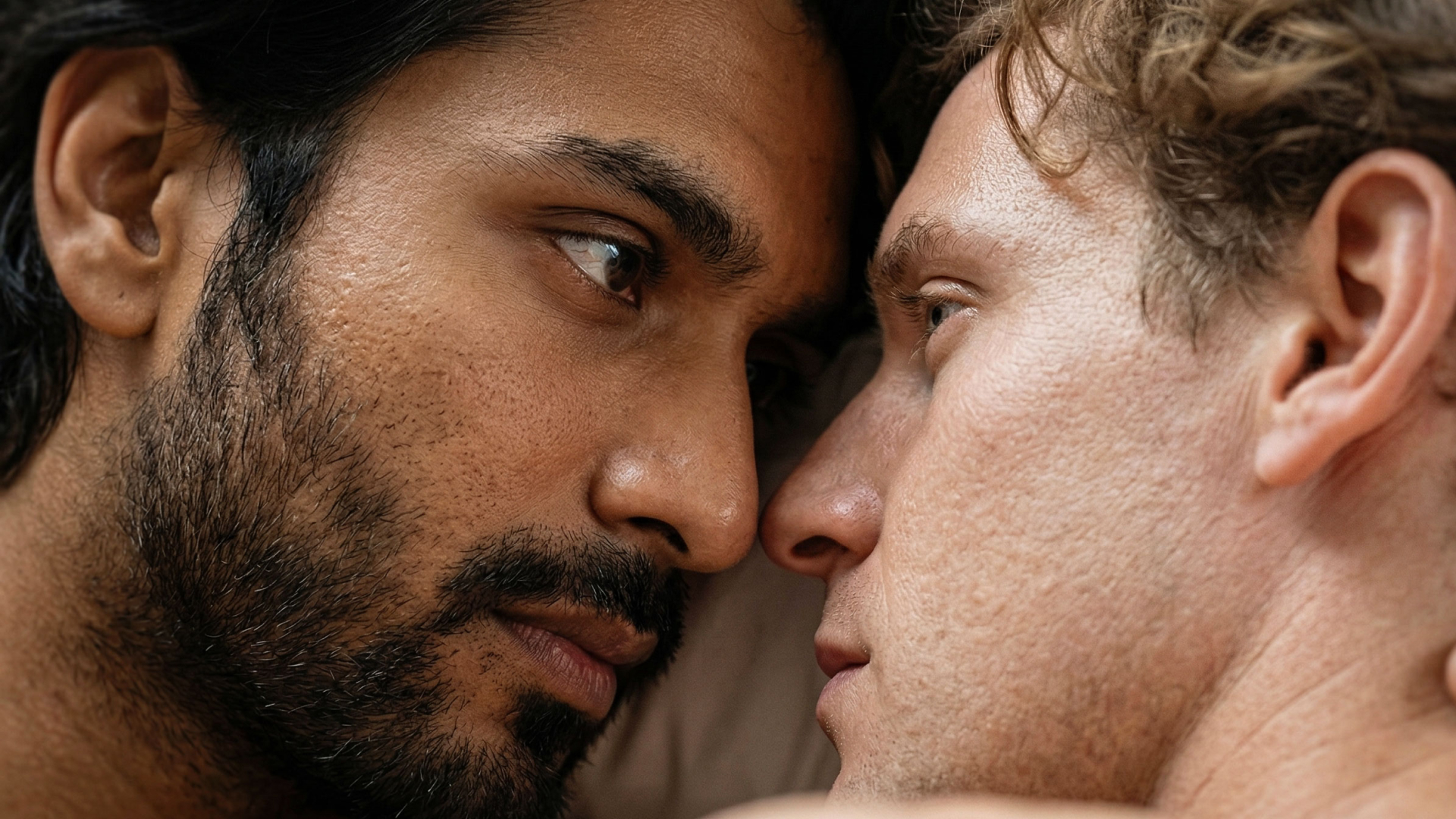

This article uses "gay man" throughout, but it's just as relevant to men who have sex with men (MSM) and other penis owners with penis-owning partners.
Yes, gay men get erections, and so they can experience erectile dysfunction (ED) just like any other man. But research suggests gay men report ED more often than straight men, at around 1.5 times the rate (Xiong et al., 2024). Some of the causes are physical, and they're the same for every man. Others, like minority stress and internalized homophobia, are specific to being a gay man.
Do gay men get erectile dysfunction more often?
Yes. Studies suggest ED is reported more often by gay men than by straight men. One estimate puts this at around 1.5 times the rate (Xiong et al., 2024). That figure draws on two earlier studies: a large survey comparing gay and straight men (Bancroft et al., 2005) and a review of several studies comparing gay and straight men's sexual health (Barbonetti et al., 2019).
This research is still thin. The Bancroft study is 20 years old and used a convenience sample, meaning the men weren't randomly selected from the wider population. The Xiong study looked at only 181 gay men, all aged 50 and over, all from the US Midwest. There's no large, recent study of ED across gay men in general.
For context: research on men generally finds up to 30% of men under 40 have experienced erection difficulties at some point (Nguyen et al., 2017). That's general data covering all men, but it shows ED itself is common no matter who you are.
If you want to understand what's actually happening in your body during ED, start with the basics of erectile dysfunction. And if you've heard some of the common myths about ED, we've also busted common erectile dysfunction myths.
What's the same, and what's different, for gay men and ED
| Factor | Applies to all men | Specific to gay men's experience |
|---|---|---|
| Age and general health | Yes. Age and health problems raise ED risk for every man. | In the one study of older gay men, age and general health, not internalized ageism, were the strongest factors linked to ED (Xiong et al., 2024). Read more about erectile dysfunction and age. |
| Physical causes (heart problems, diabetes, blood flow) | Yes, these affect every man in the same way. | No gay-specific difference found in the research. |
| Minority stress | No, this is specific to stigmatized groups. | Chronic stress tied to being part of a stigmatized group is a recognized factor in gay men's mental and sexual health (Meyer, 1995). |
| Internalized homophobia | No, this is specific to gay men. | Absorbing negative messages about being gay, even without realizing it, is part of the same stress framework (Meyer, 1995). |
| Body image and ageism within gay communities | Some body pressure affects all men. | Gay men can face sharper pressure around body image and age inside gay social spaces, according to Silva Neves' clinical experience. |
| Partner comparison | Some men compare themselves to a partner. | Comparing yourself to a partner in a same-sex context brings its own specific pressure, according to Silva Neves' clinical experience. |
The psychological side: minority stress and internalized homophobia
Being part of a group that faces stigma can create chronic stress. Psychologists call this minority stress, and it includes internalized homophobia, a sense of stigma from other people, and specific incidents of prejudice (Meyer, 1995). This framework helps explain why gay men can carry extra psychological weight around sex and their bodies that straight men don't have to.
As Silva Neves puts it, homophobia still exists, even in the most liberal households, and it can fuel shame around being gay and around sex. Heteronormativity, the assumption that being straight is the default, adds to this. It can lead gay men to pick up negative beliefs about themselves early in life, long before ED becomes a concern.
This stress doesn't stay in your head. When anxiety switches on your body's fight-or-flight response, blood moves to your muscles instead of your penis. That's a physical reason anxiety can make erections harder to get, on top of everything else going on for gay men specifically.
Body image, ageism, and comparison within the gay scene
Body image and age pressure show up often inside gay social spaces. Silva Neves sees this regularly in his clinical work: pressure to have an ideal body, a certain career, and a relationship that looks perfect from the outside. Sexual performance pressure adds another layer, including worry about penis size and about always being ready for sex.
Comparing yourself to a partner is another pressure specific to a same-sex context. Two men in bed together can make erection size or performance feel like something to measure against each other, in a way that doesn't come up the same way in straight relationships. If comparison like this is affecting your relationship, our guide on talking to a partner about erectile dysfunction can help.
These pressures build anxious thought patterns. When your mind is busy worrying about how you measure up, you're pulled out of the moment, and that anxiety is exactly what can get in the way of an erection.
What actually helps
The same things that help with ED generally can help here too: looking after your physical health, and working through the psychological factors above. Read more about psychological approaches to treating erectile dysfunction for the full picture.
Therapy can help you build communication skills, so you can tell a partner what you're nervous about instead of carrying it alone. It can also help you process the effects of homophobia and minority stress, and work through any past experiences, discrimination or otherwise, that shaped how you see yourself.
To find a therapist who understands gay men's experiences, try Pink Therapy. It's a UK organization that trains therapists in gender and sexual diversity and promotes those who work in private practice.
If therapy isn't available or affordable right now, you still have options. Online communities and forums can offer peer support anonymously. And self-help resources, including Mojo's programs, give you the same information without needing to talk to anyone face to face.
Mojo's The Erection Reset program, built with psychologist Dr. Shannon Chavez, works through this same pattern: understanding what's going on in your body and mind together, not chasing a quick fix.
As Silva Neves says, ED can be a difficult and worrying experience, but it's also very common, and it happens for lots of understandable reasons.
FAQs
Yes. Research suggests ED is reported more often among gay men, at around 1.5 times the rate seen in straight men (Xiong et al., 2024), though the research behind this figure is still fairly small.
Minority stress is the chronic stress that comes from being part of a stigmatized group (Meyer, 1995). For gay men, it includes internalized homophobia and the effects of stigma, both of which can add to the anxiety that gets in the way of erections.
The physical causes are the same for every man. What's different is the extra psychological weight from minority stress, internalized homophobia, and the body image and comparison pressures specific to gay men's experience.
Yes. Internalized homophobia is a recognized part of minority stress (Meyer, 1995), and the anxiety it creates can trigger the same fight-or-flight response that makes erections harder to get.
Support is available through therapists who specialize in working with gay men (Pink Therapy can help you find one), general therapists, and self-help resources like Mojo's programs. Start with a doctor first if you want to rule out any physical causes.
Sources
- Xiong, Y., Prieto, L. R., & Shires, D. A. (2024). Factors associated with erectile dysfunction among older gay men. Archives of Sexual Behavior, 53(8), 3151–3164. https://doi.org/10.1007/s10508-024-02908-3
- Bancroft, J., Carnes, L., Janssen, E., Goodrich, D., & Long, J. S. (2005). Erectile and ejaculatory problems in gay and heterosexual men. Archives of Sexual Behavior, 34(3), 285–297. https://doi.org/10.1007/s10508-005-3117-7
- Barbonetti, A., D'Andrea, S., Cavallo, F., Martorella, A., Francavilla, S., & Francavilla, F. (2019). Erectile dysfunction and premature ejaculation in homosexual and heterosexual men: A systematic review and meta-analysis of comparative studies. Journal of Sexual Medicine, 16(5), 624–632. https://pubmed.ncbi.nlm.nih.gov/30926517/
- Nguyen, H. M. T., Gabrielson, A. T., & Hellstrom, W. J. G. (2017). Erectile dysfunction in young men: A review of the prevalence and risk factors. Sexual Medicine Reviews, 5(4), 508–520. https://doi.org/10.1016/j.sxmr.2017.05.004
- Meyer, I. H. (1995). Minority stress and mental health in gay men. Journal of Health and Social Behavior, 36(1), 38–56. https://www.jstor.org/stable/2137286
Mojo aims to provide useful wellbeing resources to its users; however, you should not solely rely on opinions or advice available on the Website or given by the Community. Always seek advice from a qualified medical doctor or other healthcare professional before acting.
About the experts

A psychosexual therapist and Europe's leading specialist in porn habits, Silva helps people understand what's driving their habits, without judgment.






Help is available when you're feeling low – you don't have to suffer in silence. If you're in crisis or struggling to cope, find someone to talk to on Find a Helpline.