Foods for erectile dysfunction
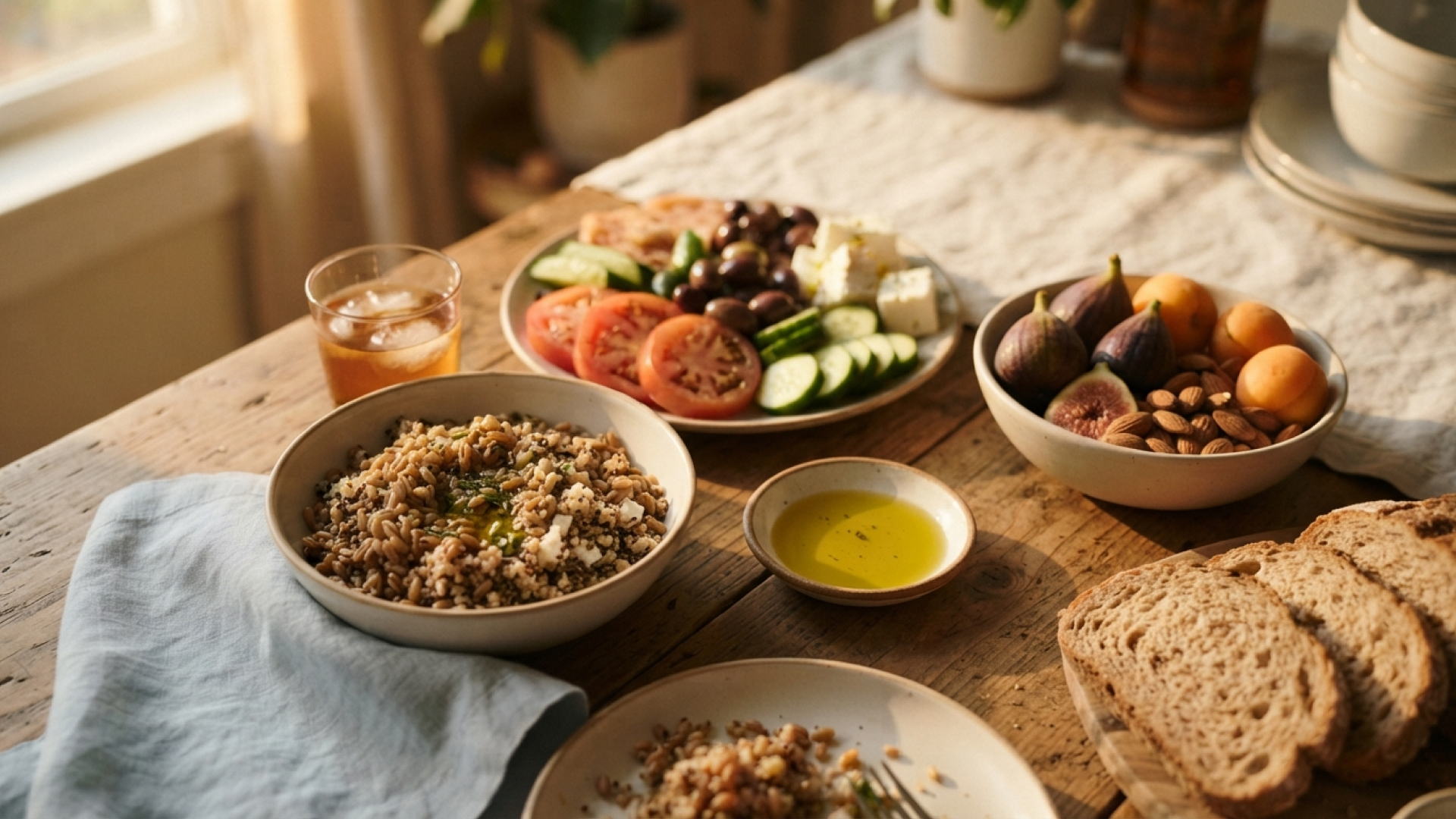

The best foods for erectile dysfunction (ED) are the ones that make up healthy eating patterns, such as plant-based or Mediterranean-style diets. These patterns support your heart and blood vessels and are linked to lower ED risk, but no single fruit, nut, or vitamin has been shown to treat ED.
A 2024 review pooled 14 studies of 27,389 men from seven countries. Plant-based diets, low-fat diets, and diets rich in fruit, vegetables, and nuts were all linked to lower odds of ED (Yang et al., 2024).
Why does diet affect erections?
Blood flow problems are a major cause of ED, but nerve problems, hormones, some medicines, and mental health can all play a part too. Diet mainly helps with the blood flow side, so it works best alongside a check-up if erection problems keep happening.
An erection starts with arousal signals from your brain. These signals tell the blood vessels in the penis to relax and fill with blood. It's also normal for an erection to fade sometimes during sex and come back.
Because erections depend on healthy blood vessels, foods that support your heart and blood vessels may support your erections too (Cassidy et al., 2016). Want the fuller picture of how erectile dysfunction happens? We cover it in more detail there.
Which foods and eating patterns have evidence behind them?
The strongest evidence is for healthy eating patterns, such as plant-based or Mediterranean-style diets. Evidence for single foods and nutrients is weaker. Some of it shows a link with ED, and some only shows a benefit for heart health or hormone levels.
| Food or eating pattern | What the study measured | What it found | Type of evidence | Source |
|---|---|---|---|---|
| Mediterranean-style diet | Erectile function in men with ED and metabolic syndrome | Erectile function scores improved more than in the control group | Direct (ED). Clinical trial | Esposito et al., 2006 |
| Plant-based, low-fat, and produce- and nut-rich diets | ED risk across 14 studies | Linked to lower odds of ED | Direct (ED). Review of studies, mostly showing links | Yang et al., 2024 |
| Flavonoid-rich fruit and berries | New cases of ED over 10 years | 9–11% lower rate of ED with the highest flavonoid intake | Direct (ED). Observational, shows a link only | Cassidy et al., 2016 |
| Folic acid supplements | Erectile function in men with blood-vessel-related ED | Scores improved, but there was no comparable untreated ED group | Direct (ED). Supplements, not food. Limited design | Elshahid et al., 2020 |
| Zinc | Testosterone levels | Correcting a zinc shortfall raised low testosterone | Indirect (hormones). Erections not measured | Prasad et al., 1996 |
| Nuts (almonds, walnuts, pistachios) | Cholesterol levels | Modest drop in LDL and total cholesterol | Indirect (heart health). Erections not measured | Nishi et al., 2025 |
Plant-based or Mediterranean-style eating patterns
A Mediterranean-style diet means whole grains, fruit, vegetables, nuts, and olive oil, with less red meat and processed food. In one trial, men who already had ED and metabolic syndrome followed this diet for two years. Their erectile function scores improved more than the control group's (Esposito et al., 2006).
That trial only included men with both ED and metabolic syndrome, so the results may not apply to all men. In the wider 2024 review, plant-based diets were linked to about 29% lower odds of ED (Yang et al., 2024). A link like this doesn't prove the diet itself prevented ED, but it fits with what the trial found.
Berries, citrus, and other flavonoid-rich fruit
One study followed more than 25,000 men for 10 years. Men who ate the most flavonoids, found in berries, citrus fruit, and red wine, had a 9–11% lower rate of ED than men who ate the least. Eating more fruit overall was linked to a 14% lower risk (Cassidy et al., 2016).
This was an observational study, which means it shows a link between eating habits and ED. It doesn't prove that fruit or flavonoids prevented ED, and no single fruit has been shown to treat it.
Zinc and folate
Zinc and folate are important for your general health. Neither has been shown to treat ED when you get them from food.
Zinc helps your body make testosterone. In one study, correcting zinc deficiency raised testosterone in men who were low to begin with (Prasad et al., 1996). That study measured testosterone, not erections, and higher testosterone doesn't automatically mean better erections.
Folate, also called vitamin B9, helps control a substance in the blood called homocysteine. High homocysteine has been linked to problems with blood vessels, so this may be one way low folate could play a part in ED.
One study gave 50 men whose ED was linked to blood vessel problems a daily folic acid supplement for 3 months, and their erectile function scores improved (Elshahid et al., 2020). The study had no comparable untreated group of men with ED, so the improvement can't be pinned on folic acid alone. It also tested supplements, not folate-rich food.
Nuts
Nuts like almonds, walnuts, and pistachios can modestly lower LDL and total cholesterol, which supports heart health (Nishi et al., 2025). That review didn't measure erections, so it's indirect evidence.
The 2024 review of 14 diet studies also linked eating more nuts with lower odds of ED, though again that's a link rather than proof (Yang et al., 2024). Curious which nuts are best for erectile dysfunction? We've broken it down separately.
Weight, body fat, and testosterone
Extra body fat can affect erections in two ways: through your hormones, and through your heart and metabolic health.
Obesity can lower testosterone through several hormonal and metabolic changes. One possible contributor is an enzyme in fat tissue called aromatase, which turns testosterone into estrogen. Men with more body fat tend to have higher aromatase activity in their fat tissue, and lower testosterone in their blood (Ahmed et al., 2025).
Extra body fat is also linked to heart and blood vessel problems, which can affect blood flow to the penis. Diet and weight management are one part of this picture, alongside other lifestyle factors that affect erections.
What about caffeine, sugar, alcohol, and dehydration?
Some common claims about these don't hold up against current evidence.
Caffeine
You might have heard that coffee raises stress hormones and harms erections. Current research doesn't support that, and it doesn't show that coffee protects erections either.
A 2024 review combined four long-term studies of 51,665 men in the US and Finland. It found no clear link between coffee and ED risk (Karimi et al., 2024).
An earlier US survey of more than 3,700 men linked 2–3 cups of coffee a day with lower odds of ED (Lopez et al., 2015). That survey looked at coffee and ED at one point in time, so it can't show that coffee prevents ED.
Sugar and dehydration
Some articles claim sugar damages the nerves involved in arousal. Nerve damage is linked to high blood sugar over a long time, especially in people with diabetes. It isn't an established result of eating sugar now and then.
Others claim dehydration directly causes ED. Staying hydrated supports healthy blood pressure and circulation, which is good for your overall health, but no study has shown dehydration causes ED on its own.
Alcohol
Alcohol can make it harder to get or keep an erection, especially when you drink a lot. It works in more than one way, including through your brain and your blood vessels.
Alcohol affects the brain signals your body needs for arousal (Rubin & Henson, 1976). It can also interfere with the physical erection response. That's why a few drinks can lower inhibitions but still make erections harder.
When should you see a doctor about ED?
If erection problems keep happening, see a doctor or other healthcare provider. ED can sometimes be an early sign of heart, metabolic, or hormone problems, so changing your diet shouldn't delay a check-up. A doctor can help work out the cause and what to try.
A qualified nutrition professional, like a registered dietitian, can help you look at your eating habits and risks like high cholesterol or blood sugar. They can't check for every medical or psychological cause of ED, so it's best to see them as well as your doctor.
Diet is one piece of a bigger picture
Up to 30% of men under 40 have experienced erection difficulties, and the causes vary a lot: psychological, blood-flow-related, weight-related, hormonal, or a mix (Nguyen et al., 2017).
Diet sits alongside the psychological side of erectile dysfunction and other erectile dysfunction treatment options. If you want to work through the whole pattern behind your erections, beyond what's on your plate, Mojo's Erection Reset is built for that.
FAQs
It can play a supporting role. Healthy eating patterns, such as plant-based or Mediterranean-style diets, are linked to lower ED risk (Yang et al., 2024), and one trial found a Mediterranean-style diet improved erectile function in men with metabolic syndrome (Esposito et al., 2006). Evidence for single foods is weaker, and if ED keeps happening, see a doctor as well.
Current evidence suggests it probably doesn't. A 2024 review of four long-term studies found no clear link between coffee and ED in either direction (Karimi et al., 2024). So coffee isn't known to cause ED or to prevent it.
No vitamin has been proven to treat ED. Correcting a zinc shortfall can raise low testosterone (Prasad et al., 1996), and folic acid supplements improved erection scores in one study that had no untreated comparison group (Elshahid et al., 2020). Neither shows that zinc- or folate-rich food treats ED.
One trial gave prescription-level niacin (vitamin B3), up to 1,500 mg a day, to men with ED and high cholesterol, and erectile function improved modestly (Ng et al., 2011). Doses this high can cause significant side effects. This isn't evidence for taking over-the-counter vitamins or eating more B3 to treat ED, so talk to a doctor before taking any high-dose supplement.
There's no solid research showing Brazil nuts, or the selenium in them, boost testosterone or libido in the general population. It's a common claim online, but we couldn't trace it to a real study, so we're not repeating it here.
Not directly, based on current evidence. Staying hydrated supports healthy blood pressure and circulation, which matters for your overall health, but no study has shown dehydration causes ED on its own.
Sources
- Cassidy, A., Franz, M., & Rimm, E. B. (2016). Dietary flavonoid intake and incidence of erectile dysfunction. The American Journal of Clinical Nutrition, 103(2), 534–541. https://doi.org/10.3945/ajcn.115.122010
- Esposito, K., Ciotola, M., Giugliano, F., De Sio, M., Giugliano, G., D'Armiento, M., & Giugliano, D. (2006). Mediterranean diet improves erectile function in subjects with the metabolic syndrome. International Journal of Impotence Research, 18, 405–410. https://doi.org/10.1038/sj.ijir.3901447
- Prasad, A. S., Mantzoros, C. S., Beck, F. W. J., Hess, J. W., & Brewer, G. J. (1996). Zinc status and serum testosterone levels of healthy adults. Nutrition, 12(5), 344–348. https://doi.org/10.1016/S0899-9007(96)80058-X
- Elshahid, A. R. M., Shahein, I. M., Mohammed, Y. F., Ismail, N. F., Zakarria, H., & Gamal El Din, S. F. (2020). Folic acid supplementation improves erectile function in patients with idiopathic vasculogenic erectile dysfunction by lowering peripheral and penile homocysteine plasma levels: A case-control study. Andrology, 8(1), 148–153. https://doi.org/10.1111/andr.12672
- Nishi, S. K., Paz-Graniel, I., Ni, J., Valle-Hita, C., Khoury, N., Garcia-Gavilán, J. F., Babio, N., & Salas-Salvadó, J. (2025). Effect of nut consumption on blood lipids: An updated systematic review and meta-analysis of randomized controlled trials. Nutrition, Metabolism and Cardiovascular Diseases, 35(5), 103771. https://doi.org/10.1016/j.numecd.2024.10.009
- Ahmed, F., Hetty, S., Laterveer, R., Surucu, E. B., Mathioudaki, A., Hornbrinck, E., Patsoukaki, V., Olausson, J., Sundbom, M., Svensson, M. K., Pereira, M. J., & Eriksson, J. W. (2025). Altered expression of aromatase and estrogen receptors in adipose tissue from men with obesity or type 2 diabetes. The Journal of Clinical Endocrinology & Metabolism, 110(10), e3410–e3421. https://doi.org/10.1210/clinem/dgaf038
- Lopez, D. S., Wang, R., Tsilidis, K. K., Zhu, H., Daniel, C. R., Sinha, A., et al. (2015). Role of caffeine intake on erectile dysfunction in US men: Results from NHANES 2001–2004. PLOS ONE, 10(4), e0123547. https://doi.org/10.1371/journal.pone.0123547
- Rubin, H. B., & Henson, D. E. (1976). Effects of alcohol on male sexual responding. Psychopharmacology, 47(2), 123–134. https://doi.org/10.1007/BF00735810
- Nguyen, H. M. T., Gabrielson, A. T., & Hellstrom, W. J. G. (2017). Erectile dysfunction in young men: A review of the prevalence and risk factors. Sexual Medicine Reviews, 5(4), 508–520. https://doi.org/10.1016/j.sxmr.2017.05.004
- Ng, C. F., Lee, C. P., Ho, A. L., & Lee, V. W. Y. (2011). Effect of niacin on erectile function in men suffering erectile dysfunction and dyslipidemia. The Journal of Sexual Medicine, 8(10), 2883–2893. https://doi.org/10.1111/j.1743-6109.2011.02414.x
- Yang, B., Wei, C., Zhang, Y.-C., Ma, D.-L., Bai, J., Liu, Z., Liu, X.-M., Liu, J.-H., Yuan, X.-Y., & Yao, W.-M. (2024). Association between improved erectile function and dietary patterns: A systematic review and meta-analysis. Asian Journal of Andrology, 27(2), 239–244. https://doi.org/10.4103/aja202485
- Karimi, M., Asbaghi, O., Kazemi, K., Maleki Sedgi, F., Soleimani, E., & Keikhay Moghadam, H. (2024). Association between caffeine intake and erectile dysfunction: A meta-analysis of cohort studies. Journal of Health, Population and Nutrition, 43, Article 154. https://doi.org/10.1186/s41043-024-00645-w
Mojo aims to provide useful wellbeing resources to its users; however, you should not solely rely on opinions or advice available on the Website or given by the Community. Always seek advice from a qualified medical doctor or other healthcare professional before acting.
About the experts

A neurobiologist and science communicator, Paula turns research on the brain, behaviour and health into clear, evidence-based education about mental, physical, and sexual well-being.






Help is available when you're feeling low – you don't have to suffer in silence. If you're in crisis or struggling to cope, find someone to talk to on Find a Helpline.