Coke dick: Cocaine, erectile dysfunction, and what can actually help
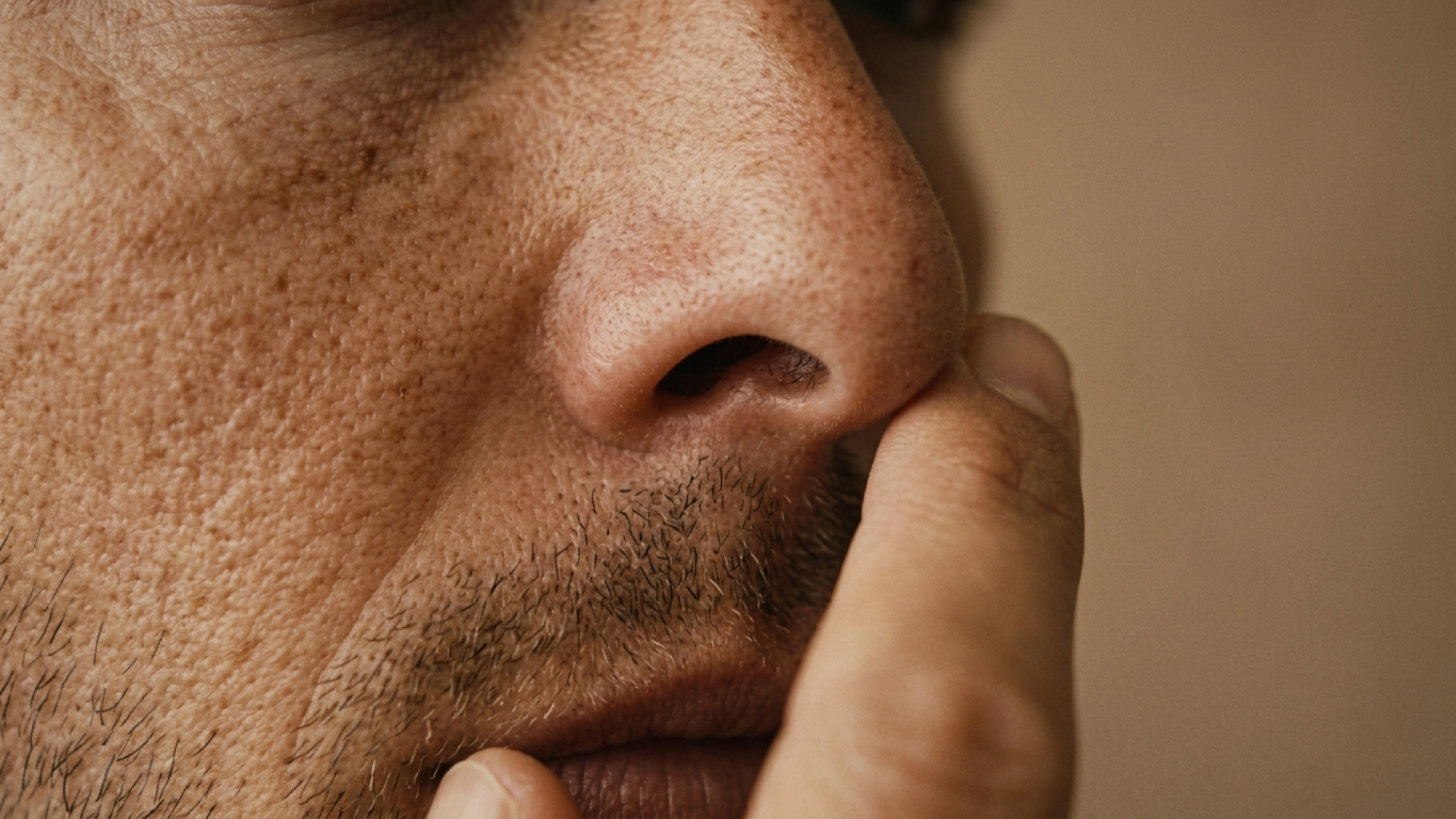

Coke dick is when cocaine makes it hard to get or keep an erection, partly because it narrows blood vessels and changes the brain signals behind sexual function. Cocaine may boost arousal at first, and for some men the problem passes quickly, but regular use can damage erectile function over time.
Among people aged 12 and older in the US, an estimated 4.3 million used cocaine in the past year as of 2024, down slightly from 4.8 million in 2021 (SAMHSA, 2025). In a Spanish study comparing 471 men in addiction treatment who used cocaine with 82 men who didn't, the cocaine users scored worse on an erectile dysfunction (ED) screening test (Cabello-García et al., 2023).
What is coke dick?
Coke dick is the inability to get or keep an erection because of cocaine use. It can be physical, psychological, or both at once.
You might not be able to get hard at all. You might get partway there and lose it. Either counts as coke dick, whether it happens once or keeps happening.
A single bad night is often just chemistry. Take cocaine, struggle to get hard, and that's coke dick in its simplest form.
Cocaine's effects on sex can also change over time. Early on, it may make you feel more turned on and can even improve erections. Longer-term use can lower sex drive, weaken erections, and delay ejaculation (Ghadigaonkar & Murthy, 2019).
When the pattern repeats, the drug might not be the only thing going on. Regular use can harm erectile function directly, and worry about sex can build on top of that physical change and stay after the drug is gone.
The causes of coke dick
Cocaine narrows your blood vessels and disrupts the signals your body needs for an erection. Short-term use and long-term use may cause this in different ways.
Short-term causes
Cocaine is a vasoconstrictor, which means it narrows blood vessels. One of the ways it can affect erections is by narrowing the vessels that carry blood to your penis. Less blood flow makes it harder to get or keep an erection while the drug is active in your system, no matter how turned on you feel mentally.
This effect may fade as cocaine clears your body. Some people notice that the time it takes depends on how much they used and how often. Using more cocaine to override the problem might make it worse, since you're adding fresh vasoconstriction on top of what's already there.
Delayed ejaculation can show up at the same time. Some guys notice it takes much longer to finish on cocaine, or that finishing doesn't happen that night at all. Research suggests cocaine can affect neurotransmitters, the brain's chemical messengers involved in sexual function, though scientists don't fully understand how yet (Rosati et al., 2023).
Longer-term causes
Regular cocaine use changes the picture in three ways.
First, cocaine has been shown to damage blood vessels (Bachi et al., 2017). Erections depend on healthy blood vessels, so over time this damage may add to erection problems.
Second, your sex drive can drop over time. Cocaine affects dopamine and other brain chemicals, and long-term use has been linked to lower desire and sexual problems (Ghadigaonkar & Murthy, 2019). The effects vary from person to person, and researchers haven't yet worked out how these changes affect sexual pleasure over the long term.
Third, you can start relying on cocaine to feel confident in bed. That's a psychological shift, and it can be a harder problem to work through. Relying on the drug for confidence has a lot in common with how stress affects erections, and it may need its own kind of support.
Coke dick timeline: short-term vs. long-term
For some people, coke dick clears once cocaine leaves the body. Regular use can make it last longer than the drug itself does.
The stages below can overlap, and the effects vary a lot between people, so use this table as a rough guide only. It can't tell you how long your own recovery will take.
| Timeframe | What's happening | How long it lasts | What might help |
|---|---|---|---|
| While the drug's effects persist | Blood vessels are constricted (vasoconstriction), reducing blood flow to the penis, and the drug affects the brain's chemical messengers (neurotransmitters) | Until the drug's effects wear off, which varies with the dose and the person | Time, and avoiding redosing |
| After the drug clears | Comedown effects like fatigue, low mood, and anxiety can suppress arousal and sexual function even after vasoconstriction eases | Varies from person to person and with the amount used | Rest, hydration, and avoiding pressure to perform |
| With repeated or heavy use over time | Cumulative strain on your blood vessels, long-term effects on the nervous system's pathways, and psychological dependence on cocaine for sexual confidence can develop | Can persist after use stops | Cutting back or stopping use, seeking medical advice, and addressing performance anxiety directly |
When erection issues point to something else
An occasional episode might not necessarily be a red flag. Recurring erection issues after cocaine use are a sign to seek professional help. You may also want to consider whether performance anxiety is part of the picture.
In addition to cocaine-related sexual problems, performance anxiety is common, and it can keep erection problems going even after a physical cause eases. In one clinic study of 948 men with ED in Turkey, 83% of men under 40 had mainly psychological ED, compared with 40.7% of men over 40 (Caskurlu et al., 2004).
Worrying about your erection can be enough to affect your erection. Some people report a worry-erection cycle that starts with cocaine, where the worry keeps the problem going months later.
This is where it helps to understand psychological erectile dysfunction and what could help tell if ED is physical or psychological. Knowing which one you're dealing with changes what actually helps. A healthcare professional can help you work out the cause of erectile dysfunction and how to manage it.
Getting back to normal: what actually helps
Cutting back or stopping cocaine is the first step for the physical side, since erection problems can remain after quitting. Addressing performance anxiety can help with the psychological side.
If it's a physical, one-off issue
Stop using cocaine and give your body time to clear it. No supplement, position, or amount of foreplay will out-run vasoconstriction and changes in brain chemistry while the drug is still active.
If you lose your erection while you're with a partner, don't make the whole night about it. Extended foreplay, oral sex, and touch that isn't aimed at penetration all still count as sex. Saying something like "my body's not cooperating tonight, let's do something else" tends to land a lot better than going quiet and hoping nobody notices.
If erection problems continue after you stop using cocaine
For some men, erection problems last even after they stop using cocaine. In the Spanish study of men in addiction treatment, all of whom had stopped using cocaine for at least 3 months, sexual function scores didn't seem to improve with longer time off the drug (Cabello-García et al., 2023). That study looked at one point in time, so it can't prove cocaine caused the problems.
If this sounds like you, see a doctor. A doctor can help on both fronts: support to cut down or quit cocaine, and treatment options for the erection problems themselves.
If performance anxiety is becoming the bigger problem
If you've started worrying about sex, or feel like you need cocaine to feel confident, that's a pattern you can change. It's a loop, and loops can be retrained.
Sexual performance anxiety works the same way whatever first triggered it, whether that's cocaine, stress, or a single bad experience. The anxiety takes on a life of its own once it starts, separate from whatever caused it in the first place. That's actually good news: you don't need to solve the original trigger to start working on the anxiety itself.
Some men find it helps to slow down and rebuild a sense of their own arousal without any pressure attached, through something like mindful masturbation techniques, before worrying about performing with a partner again.
Mojo's Erection Reset program was built for exactly this: performance anxiety, the mental spiral that follows a bad experience, and rebuilding confidence that doesn't depend on a substance. It retrains the signals your body sends itself before sex even starts.
Is it safe to mix cocaine and Viagra or other ED medication?
No. Combining a stimulant like cocaine with a PDE5 inhibitor, the drug class that includes Viagra, Cialis, and similar medications, puts real strain on your heart and blood vessels. Both push your cardiovascular system in overlapping ways, and stacking them adds risk.
Erectile dysfunction medication is not a safe quick workaround for coke dick. If you take any medication and also use recreational drugs, talk to a doctor about the combination before you mix them. A doctor can weigh your health history in a way a blog post cannot.
Priapism: when coke dick becomes a medical emergency
A painful erection that won't go down on its own, known as priapism, is a medical emergency. If an erection lasts more than 3 to 4 hours, get urgent care (NHS, 2023).
Cocaine use has been linked to priapism in medical case reports. If this happens to you or someone you're with, get to a hospital right away.
Do not wait it out at home. Emergency room staff have seen it before and will be able to help you.
FAQs
Usually not. For most men who experience it for the first time, it clears up once cocaine is out of their system and the drug's effects wear off. It can last longer with regular or heavy use, and anxiety about it can also build up on top of the physical cause.
Yes. A single dose can cause vasoconstriction and affect your brain chemistry enough to make an erection harder while the drug is active in your system. This can happen even if you've never had the problem before.
It can. Some men notice delayed ejaculation on cocaine, either alongside erection issues or on its own.
No. The combination adds strain on your cardiovascular system. Talk to a doctor rather than combining the two yourself.
See a doctor if it keeps happening or it's affecting your confidence more broadly. A doctor can give you an actual diagnosis and talk you through treatment options, including whether cocaine use is the main driver or something else is going on too. A painful erection that won't go down for hours is an emergency, so get to a hospital.
Sources
- Bachi, K., Mani, V., Jeyachandran, D., Fayad, Z. A., Goldstein, R. Z., & Alia-Klein, N. (2017). Vascular disease in cocaine addiction. Atherosclerosis, 262, 154-162. https://pmc.ncbi.nlm.nih.gov/articles/PMC5757372/
- Cabello-García, M. A., del Río, F. J., García-Rojas, A. D., & Cabello-Santamaría, F. (2023). Prevalence of sexual dysfunction risk in cocaine users in a sample of Spanish men. Journal of Men's Health, 19(11), 90-95. https://doi.org/10.22514/jomh.2023.108
- Caskurlu, T., Tasci, A. I., Resim, S., Sahinkanat, T., & Ergenekon, E. (2004). The etiology of erectile dysfunction and contributing factors in different age groups in Turkey. International Journal of Urology, 11(7), 525-529. https://doi.org/10.1111/j.1442-2042.2004.00837.x
- Ghadigaonkar, D. S., & Murthy, P. (2019). Sexual dysfunction in persons with substance use disorders. Journal of Psychosexual Health, 1(2), 117-121. https://doi.org/10.1177/2631831819849365
- National Health Service. (2023, December 5). Priapism (painful erections). https://www.nhs.uk/symptoms/priapism-painful-erections/
- Rosati, L., Chianese, T., Mileo, A., De Falco, M., & Capaldo, A. (2023). Cocaine effects on reproductive behavior and fertility: An overview. Veterinary Sciences, 10(8), Article 484. https://doi.org/10.3390/vetsci10080484
- Substance Abuse and Mental Health Services Administration. (2025). Key substance use and mental health indicators in the United States: Results from the 2024 National Survey on Drug Use and Health (HHS Publication No. PEP25-07-007, NSDUH Series H-60). https://www.samhsa.gov/data/sites/default/files/reports/rpt56287/2024-nsduh-annual-national/2024-nsduh-annual-national-html-071425-edited/2024-nsduh-annual-national.htm
Mojo aims to provide useful wellbeing resources to its users; however, you should not solely rely on opinions or advice available on the Website or given by the Community. Always seek advice from a qualified medical doctor or other healthcare professional before acting.
About the experts

A medical doctor and women's health educator, Rugilė helps women understand periods, pain, and intimate health without myth or stigma.






Help is available when you're feeling low – you don't have to suffer in silence. If you're in crisis or struggling to cope, find someone to talk to on Find a Helpline.