Can't stay hard with a condom? Why it happens and how to get used to condoms
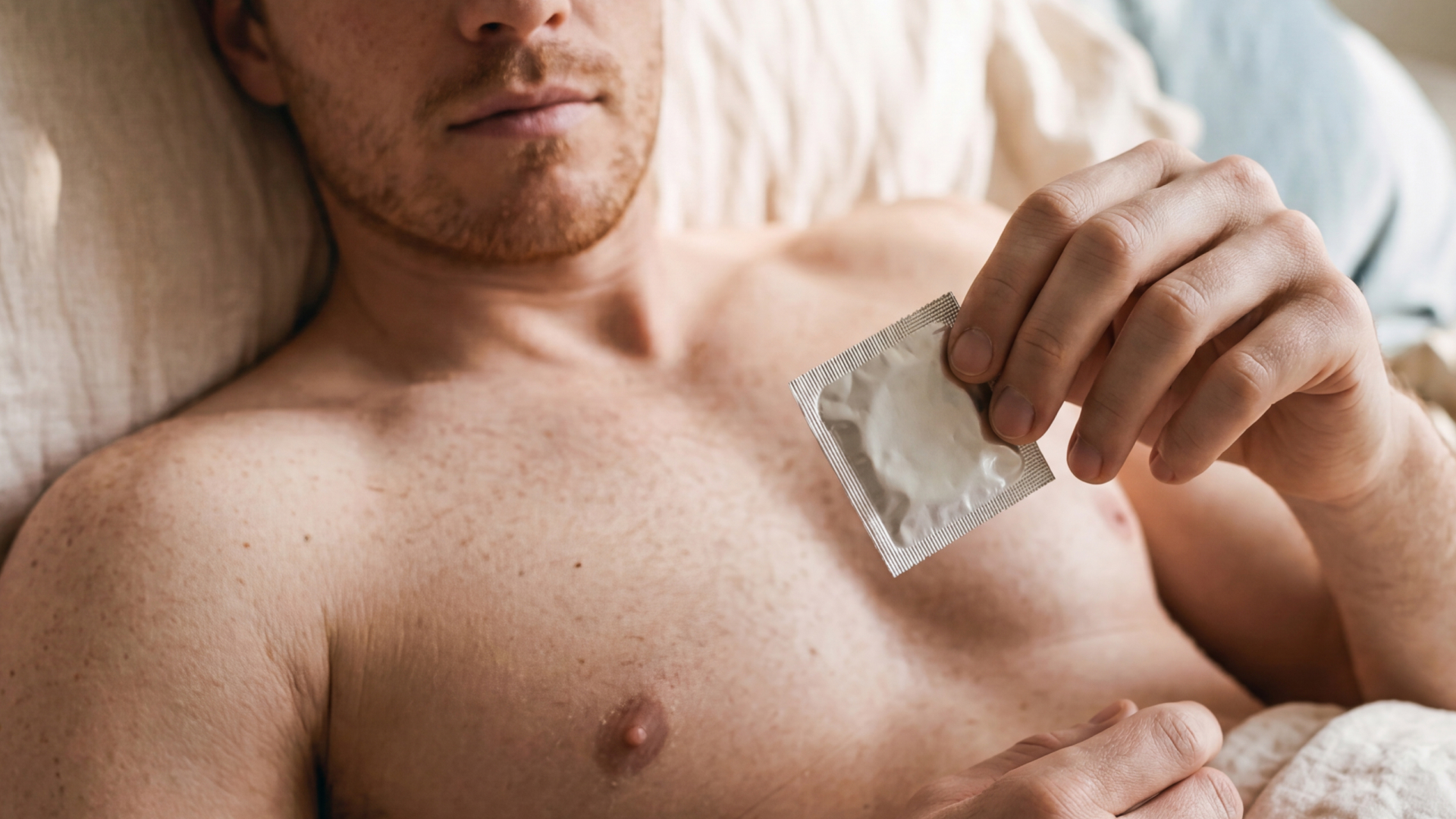

Losing an erection when you put on a condom is common, and it rarely means you have erectile dysfunction (ED). Research on condom-associated erection problems finds that roughly a quarter to a third of men experience this at least once in a while (Graham et al., 2016; Dame et al., 2020). Usually it comes down to less sensation, rushing the moment, or feeling anxious or awkward about the pause. Most men get past it by practicing putting a condom on by themselves, slowing down, finding the right fit, and taking the pressure off the moment. If it happens every time, with every partner, and without a condom too, that's worth checking with a doctor.
This guide explains why condoms affect your erection, whether they can cause ED, how to get used to wearing them, which condom types help, and when to see a doctor.
Is it normal to lose your erection when you put on a condom?
Yes. In a study of 494 young men attending US sexual health clinics, 26.1% said they lost their erection at least once while using a condom over a two-month period (Graham et al., 2016). A review of nine studies on this same problem in men under 40 found a similar range, between 18% and 36% (Dame et al., 2020). That range backs up the same picture.
Amanda Barge sees a clash between excitement and anxiety in the moment you reach for the condom.
Why condoms affect your erection
Three things tend to cause this, often at the same time.
A condom reduces physical sensation. That's the barrier doing exactly what it's designed to do, but it can make arousal feel less intense than it did a moment before.
The pause itself can break your momentum. Reaching for the condom before you're fully erect is one of the strongest predictors of losing it altogether (Graham et al., 2016), because your body has to hold onto arousal through an interruption it didn't expect.
Then there's sexual performance anxiety about that pause. Barge points to the same fight-or-flight response: worry about fumbling the wrapper, being watched, or breaking the mood can be enough to talk your body out of an erection before you've even opened the packet.
These causes often feed each other. If a condom that didn't fit right once made you go soft, you might start expecting it to happen again, and that expectation becomes its own source of worry.
The table below sums up the three causes and gives one quick fix for each.
| Driver | What's happening | Quick fix to try |
|---|---|---|
| Reduced sensation | The barrier itself dulls physical feedback | Try a thinner material or snugger fit |
| Broken arousal momentum | Condom applied before a full erection, or the pause itself interrupts arousal | Build application into foreplay rather than treating it as a stop |
| Performance anxiety | Fight-or-flight response to the pressure of the moment | Name the anxiety out loud with a partner, and practice solo first |
Do condoms cause erectile dysfunction?
No. Condoms don't cause ED. The research links condom use to erection loss in the moment, but the studies can't prove the condom is the cause. None of them show that condoms damage erectile function over time (Graham et al., 2016; Dame et al., 2020).
Condom-associated erection loss is usually situational and psychological erectile dysfunction rather than a physical problem. It's set off by a specific trigger, like an awkward fit or nerves about the pause.
One study found up to 85% of ED cases in men under 40 were psychological (Nguyen et al., 2017). Up to 30% of men under 40 have experienced erection difficulties at some point (Nguyen et al., 2017). If condoms are the trigger, The Erection Reset is built around this exact kind of situational, psychological erection difficulty, with exercises that help you rebuild confidence step by step.
Ready to stop worrying about it and start enjoying sex again? The Erection Reset is Mojo's expert-led program for situational and psychological erection difficulties, built around exercises that help you rebuild confidence step by step.
How to get used to wearing condoms
Getting comfortable with condoms is a skill. Skills get easier with practice.
Practice putting a condom on by yourself before you need one with a partner. Try it lying down, kneeling, or whatever position you'd actually be in during sex. The more familiar the motion feels, the less it interrupts you later.
Try different fits and materials. A condom that's the wrong size or too thick can be the whole problem, and switching is often the fastest fix.
Build the condom into foreplay instead of treating it as a pause from the moment. Mojo co-founder Xander Gilbert describes what works for him.
"Using condoms is something that can create anxiety for me. I find them so fiddly and annoying. One thing that can help is turning condoms into a bit of a game. Speaking openly with a partner, explaining that it can be an issue, and finding fun ways for them or you to put condoms on, can change the way you look at condoms. It makes it exciting rather than fear-inducing."
Xander Gilbert, Mojo co-founder
Talk to your partner about it too. Naming the issue out loud usually takes more pressure off than staying quiet about it.
Condom types and fixes that help you stay hard
Fit and sensation are the two things worth testing first.
A snugger fit keeps the condom from feeling loose or distracting mid-sex. A thinner material keeps more sensation intact, which directly addresses the reduced-sensation driver above. Beyond that, it's genuinely personal. Testing a few types on your own first, before you need one with a partner, is the fastest way to find what works for your body.
| If this is the problem | Try | Why it helps |
|---|---|---|
| Feels too loose or distracting | A snugger-fit condom | Restores physical feedback |
| Feels numbing or over-dulled | A thinner material | Reduces sensation loss without dropping protection |
| Application breaks the mood | Applying it as part of foreplay, not a pause | Keeps arousal building instead of resetting it |
| Consistently anxious about the moment | Practicing application solo first | Removes performance pressure from the first few tries |
When to see a doctor about losing erections with condoms
If it only happens with a condom, and you're fine without one, that pattern points toward a situational cause.
It's worth talking to a doctor if it happens consistently, with every partner, with and without a condom, or alongside other symptoms. That pattern looks less like condom-specific anxiety and more like something worth ruling out physically. Our guide on whether it's physical or psychological walks through how to tell the difference.
FAQs
Usually it's a mix of reduced sensation, the pause breaking your arousal, and anxiety about that pause itself (Graham et al., 2016). It's rarely a sign of an underlying physical problem.
Not on its own. Condom-associated erection loss is usually situational, and there's no evidence that condoms cause ED directly (Graham et al., 2016; Dame et al., 2020). If it happens with every partner and without a condom too, that's worth checking with a doctor.
Yes. Worry about fumbling the wrapper, being watched, or breaking the mood can trigger a fight-or-flight response that makes it harder to stay hard, even before anything physical is involved.
A snugger fit and a thinner material are the two easiest changes to test. Beyond that, it comes down to what feels right for your body, which is worth testing on your own first.
Talk about it openly, build it into foreplay instead of pausing for it, and try letting your partner put it on as part of the moment.
Sources
- Graham, C. A., Crosby, R., Sanders, S. A., Milhausen, R., & Yarber, W. L. (2016). Condom-associated erection problems: A study of high-risk young Black males residing in the southern United States. American Journal of Men's Health, 10(2), 141–145. https://doi.org/10.1177/1557988314561311
- Dame, J., Oliffe, J. L., Hill, N., Carrier, L., & Evans-Amalu, K. (2020). Condom associated erection problems (CAEP) in heterosexual young men (under 40): A systematic review and qualitative synthesis. Canadian Journal of Human Sexuality, 29(2). https://doi.org/10.3138/cjhs.2020-0008
- Nguyen, H. M. T., Gabrielson, A. T., & Hellstrom, W. J. G. (2017). Erectile dysfunction in young men: A review of the prevalence and risk factors. Sexual Medicine Reviews, 5(4), 508–520. https://doi.org/10.1016/j.sxmr.2017.05.004
Mojo aims to provide useful wellbeing resources to its users; however, you should not solely rely on opinions or advice available on the Website or given by the Community. Always seek advice from a qualified medical doctor or other healthcare professional before acting.
About the experts

With 18 years as an accredited COSRT and BACP therapist, Amanda helps people navigate desire, intimacy, and the changes life brings.






Help is available when you're feeling low – you don't have to suffer in silence. If you're in crisis or struggling to cope, find someone to talk to on Find a Helpline.